

what is qi stagnation? understanding energy blocks in simple terms

Have you ever felt stuck—like your body is tight, your mood is short, and everything just feels harder than it should? Maybe your shoulders are tense, your jaw is clenched, or you notice yourself snapping at the people you care about. In Traditional Chinese Medicine (TCM), this feeling of being blocked or bottled up is often described as "Qi Stagnation."
Qi (pronounced "chee") is the vital energy that flows through your body, keeping everything moving smoothly—your blood, your digestion, your emotions, even your ability to adapt to stress. When that flow gets blocked or stuck, we call it Qi Stagnation. And in our fast-paced, high-stress world, it's one of the most common patterns we see in the clinic.
What Causes Qi Stagnation?
Qi Stagnation doesn't usually happen overnight. It builds up gradually, often as a result of how we live and what we carry. Some of the most common causes include:
Chronic stress and emotional strain: When we hold onto frustration, anger, worry, or grief without releasing it, our energy gets stuck. This is especially true when we don't feel safe to express what we're feeling.
Overwork and lack of rest: Pushing through exhaustion without giving your body time to recover creates tension and blocks flow.
Sedentary lifestyles: Sitting for long hours—whether at a desk, in a car, or on the couch—can slow down circulation and trap energy in the body.
Poor sleep: When we don't rest well, our body doesn't have the chance to reset and restore balance.
Diet and digestion issues: Eating on the run, skipping meals, or consuming foods that don't agree with us can clog up the digestive system and interfere with smooth Qi flow.
Lack of movement: Physical activity helps Qi circulate. Without it, energy can become heavy and stuck.
In Richmond and in communities everywhere, many of us are juggling work, family, bills, and responsibilities—often with little time to pause. That constant pressure can create a perfect environment for Qi Stagnation to take root.

Also Read: Foods to Move Qi Stagnation
Common Signs of Qi Stagnation
Qi Stagnation can show up in many different ways, both physically and emotionally. You may notice:
Feeling irritable, frustrated, or easily annoyed
Tightness or tension in the chest, shoulders, neck, or jaw
Frequent sighing or feeling like you can't take a deep breath
Headaches, especially on the sides of the head or around the temples
Digestive issues like bloating, gas, or alternating constipation and loose stools
PMS symptoms such as breast tenderness, cramping, or mood swings before your period
A sense of being "stuck" in life—emotionally, physically, or mentally
Trouble sleeping or waking up feeling unrested
According to TCM theory, Qi Stagnation often affects the Liver system, which is responsible for the smooth flow of Qi and blood throughout the body. The Liver also plays a key role in regulating emotions, which is why stress and frustration are so closely tied to this pattern.¹
How Acupuncture Helps Move Stuck Energy
Acupuncture is one of the most effective tools for addressing Qi Stagnation. By placing tiny, hair-thin needles at specific points on the body, acupuncture helps to gently release blockages and restore smooth flow.
Research shows that acupuncture can help reduce stress, regulate the nervous system, and improve circulation—all of which support the body's natural ability to move energy.²³ Many people report feeling lighter, calmer, and more relaxed after treatment. Some even notice their breathing deepens or their shoulders drop during the session itself.
Acupuncture works by:
Calming the nervous system: Acupuncture activates the parasympathetic nervous system, which helps the body shift out of "fight or flight" mode and into rest and repair.
Releasing physical tension: Needles placed near tight muscles or along energy pathways can help ease pain and loosen areas that feel stuck.
Supporting emotional regulation: By restoring balance to the body's energy systems, acupuncture can help ease irritability, frustration, and mood swings.
Improving circulation: When Qi flows smoothly, blood and nutrients can move more freely throughout the body, supporting overall health.
Supporting Yourself Between Treatments
While acupuncture is a powerful tool for moving stuck Qi, there are also simple things you can do at home to support your body's natural flow:
Move your body regularly: Walking, stretching, yoga, dancing, or even just getting up from your desk can help keep energy moving. You don't need a gym membership—just gentle, regular movement.
Breathe deeply: Taking slow, full breaths helps release tension and signals to your body that it's safe to relax.
Express your feelings: Talk to a friend, journal, or find a creative outlet. Holding emotions in is one of the quickest ways to create stagnation.
Spend time outdoors: Fresh air and nature can help reset your nervous system and remind your body how to flow.
Prioritize rest: Give yourself permission to slow down. Rest is not a luxury—it's a necessity.
Eat warming, nourishing foods: Soups, stews, and gently cooked vegetables support digestion and help your body process what it takes in—both food and emotions.
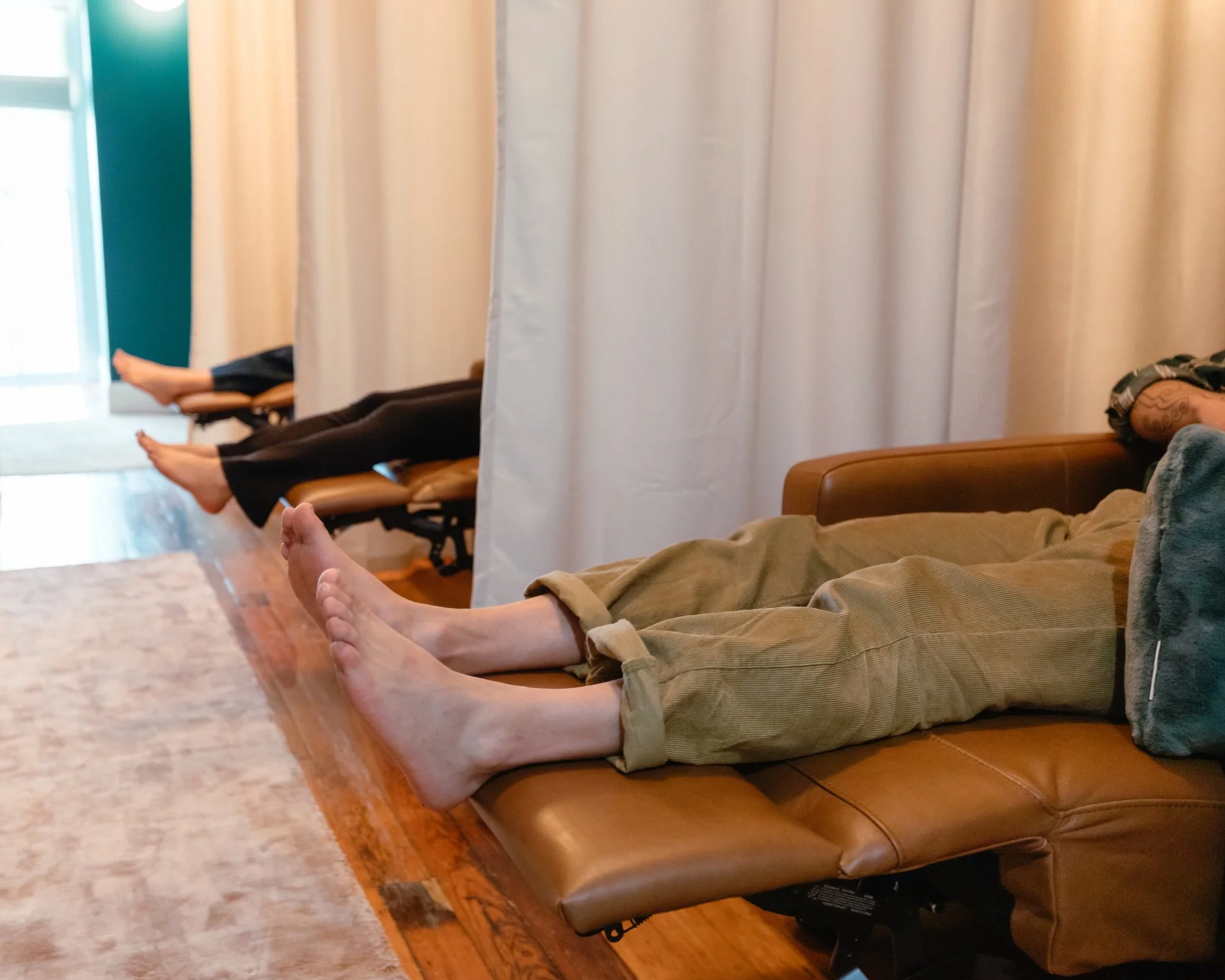
Qi Stagnation and Community Care
Here in Richmond, so many of us are navigating the same pressures—long work hours, caregiving responsibilities, financial stress, and the weight of simply trying to keep up. When we're all running on empty, it's easy to feel isolated in our exhaustion. But the truth is, we're not alone in this.
Healing doesn't have to be something we do by ourselves. At Vital Qi, we believe in the power of collective care—of creating space where people can slow down, release what they're holding, and reconnect with their own vitality. Whether it's through acupuncture, community clinics, or simply being in a room with others who understand, there's healing in knowing you're supported.
If you've been feeling stuck, tense, or overwhelmed, acupuncture may be able to help. We'd love to support you in finding your flow again.
You can book an appointment at vitalqi.com/book or learn more about our community-centered approach to care on our website.
References
Maciocia G. The Foundations of Chinese Medicine: A Comprehensive Text for Acupuncturists and Herbalists. 3rd ed. Edinburgh: Churchill Livingstone; 2015.
Li QQ, Shi GX, Xu Q, Wang J, Liu CZ, Wang LP. Acupuncture effect and central autonomic regulation. Evid Based Complement Alternat Med. 2013;2013:267959. doi:10.1155/2013/267959
Amorim D, Amado J, Brito I, Fiuza SM, Amorim N, Costeira C, Machado J. Acupuncture and electroacupuncture for anxiety disorders: A systematic review of the clinical research. Complement Ther Clin Pract. 2018;31:31-37. doi:10.1016/j.ctcp.2018.01.008
Eshkevari L, Permaul E, Mulroney SE. Acupuncture blocks cold stress-induced increases in the hypothalamus-pituitary-adrenal axis in the rat. J Endocrinol. 2013;217(1):95-104. doi:10.1530/JOE-12-0404
